
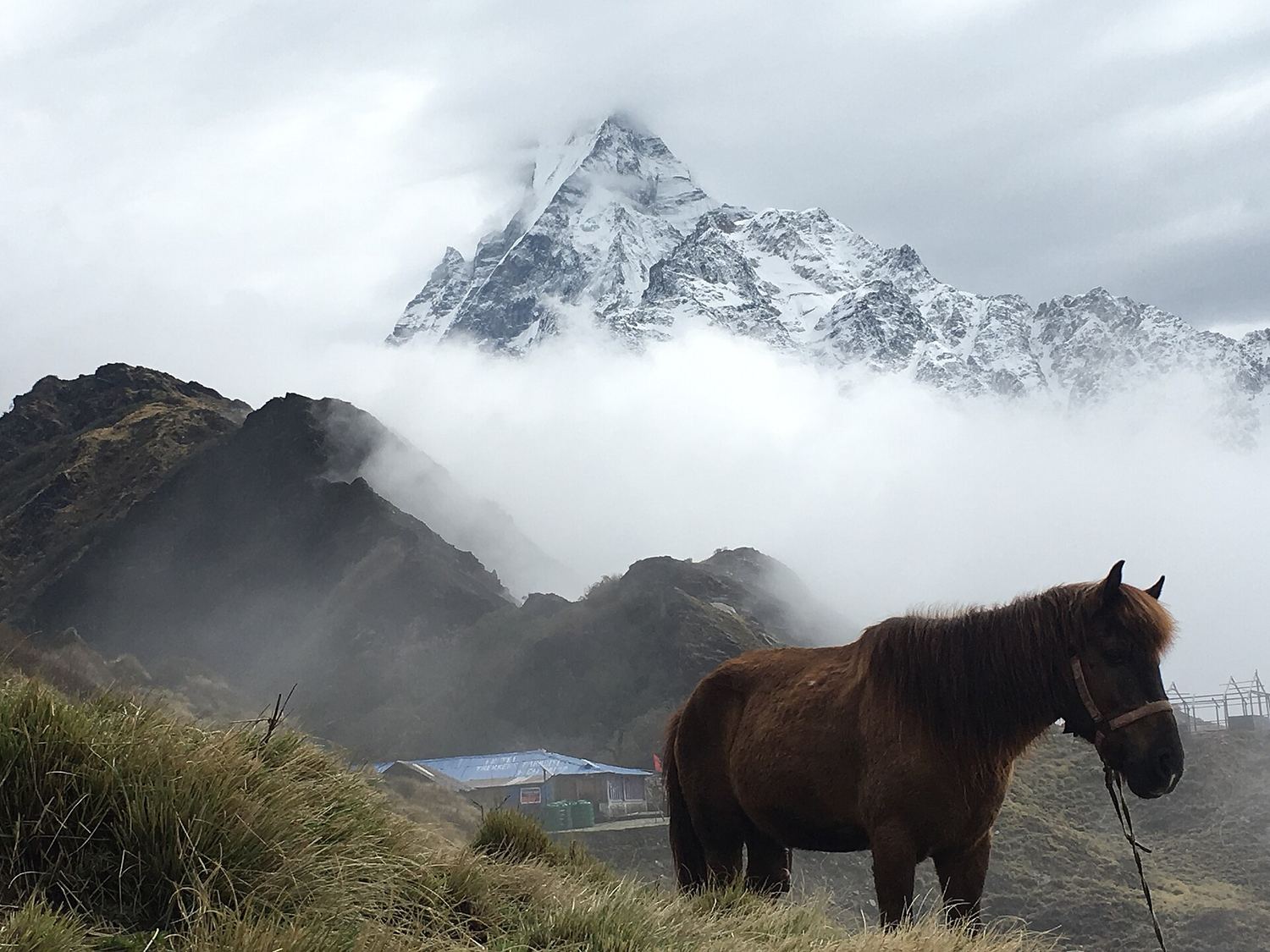
Forest camps to High Camp
A typical Mardi Himal plan drives from Pokhara to Kande and walks through Australian Camp and Pothana to Deurali, then leaves the busier Annapurna Base Camp trail to climb a forested ridge. The lodges are named for their position — Forest Camp, Low Camp, High Camp — rather than for villages, because this is a newer route with fewer permanent settlements.
From High Camp, at roughly 3,550 metres, an early out-and-back heads toward the Mardi Himal viewpoint at about 4,450 metres when conditions allow, before the trek descends to Siding and the road to Pokhara.
How hard it really is
Mardi Himal is short but not easy. It gains altitude quickly, the ridge above Low Camp is steep and exposed, and the lodges are simpler than on the Poon Hill trail. The viewpoint day involves a pre-dawn start on a narrow path. Nepal Tourism Board lists Mardi Himal among routes requiring a licensed guide and an agency-issued TIMS card, and ACAP entry applies.
Because the sleeping altitude climbs faster than on Poon Hill, treat any headache, nausea or unusual fatigue as possible acute mountain sickness and do not continue up while symptomatic.
When it suits you
Mardi Himal is a good choice if you have five to seven days, want a more alpine feeling than Poon Hill, and are comfortable with steep trail and basic lodges. It is less suitable as a true first trek if you have no recent hill-walking experience.
The clear-weather windows are the same as the rest of the Annapurna region: roughly March to May and October to November. Winter is possible but cold, with snow on the upper ridge.