
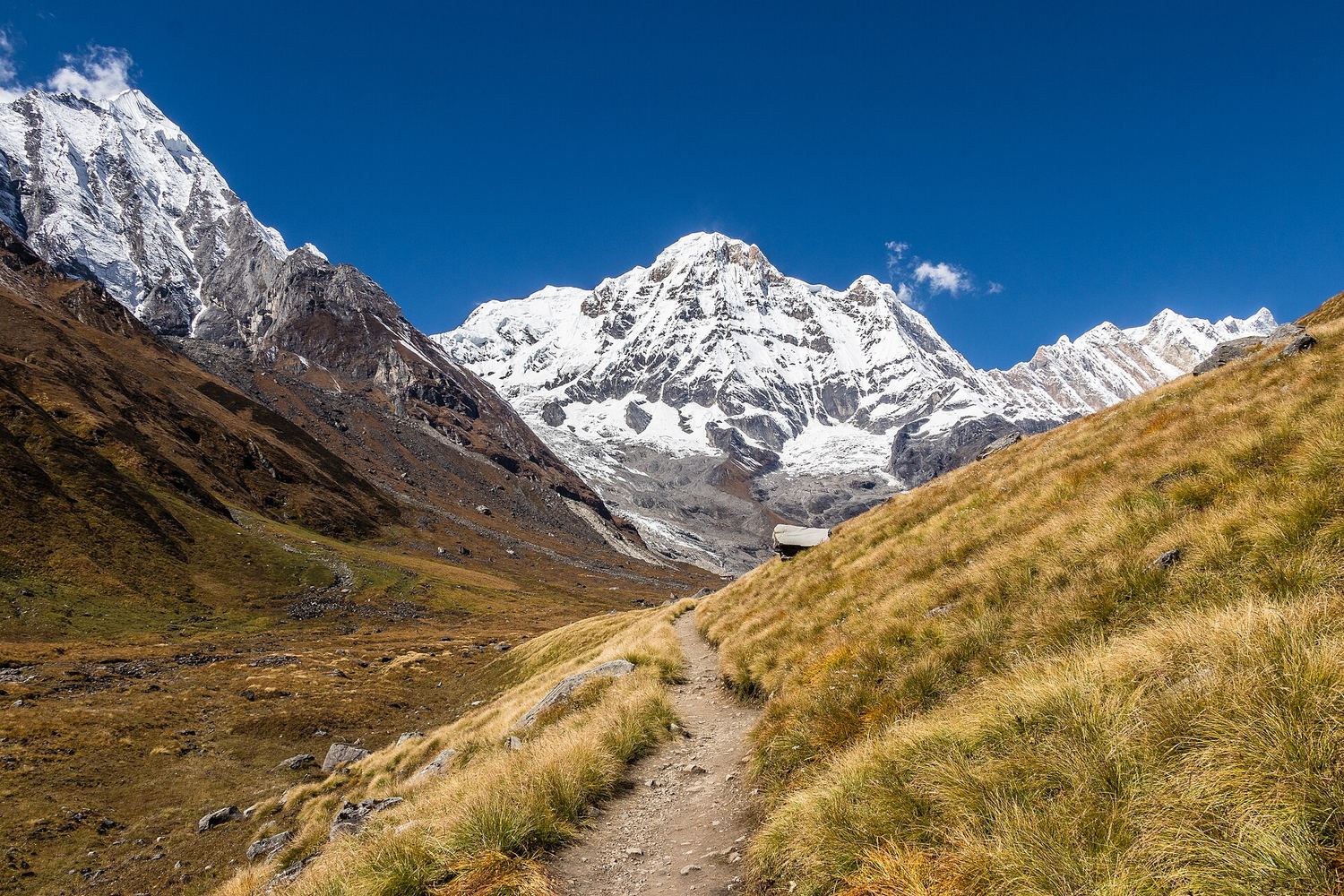
The approach through Chhomrong
A common Annapurna Base Camp plan drives from Pokhara to the Ghandruk roadhead, walks to Chhomrong — the gateway village to the sanctuary — then follows the narrowing Modi Khola valley through Bamboo, Dovan and Deurali. The last day into the sanctuary passes Machhapuchhre Base Camp before reaching Annapurna Base Camp at about 4,130 metres, ringed by peaks. The return retraces the valley, often finishing at Jhinu Danda.
It is a teahouse trek throughout, but the stone stairways around Chhomrong are long and the higher lodges are simpler. Most itineraries run nine to eleven days from Pokhara.
No high pass, but real altitude
The appeal of Annapurna Base Camp is that it reaches a dramatic high place without crossing a pass. That does not remove the altitude risk: you sleep above 3,000 metres for several nights and gain height on the final approach. The CDC advises gradual ascent above 3,000 metres and an acclimatisation night for each additional 1,000 metres of sleeping altitude gained.
Build at least one buffer day into the plan, walk at a conversational pace, and be ready to stop or descend if anyone develops headache with nausea, dizziness or unusual fatigue. Nepal Tourism Board lists the Poon Hill to Annapurna Base Camp route among those requiring a licensed guide and agency-issued TIMS; ACAP entry also applies.
Avalanche awareness and season
The upper Modi Khola valley between Hinku Cave and Deurali runs below avalanche paths. Guides adjust the timing of this section by conditions, particularly after heavy snow or during the spring melt, and the route can close temporarily. This is one reason to travel with a guide who knows the current state of the trail.
The reliable windows are roughly October to November and March to May. Winter brings snow and cold to the sanctuary; the monsoon brings rain, leeches and cloud that hides the peaks.