
Why visit Pokhara
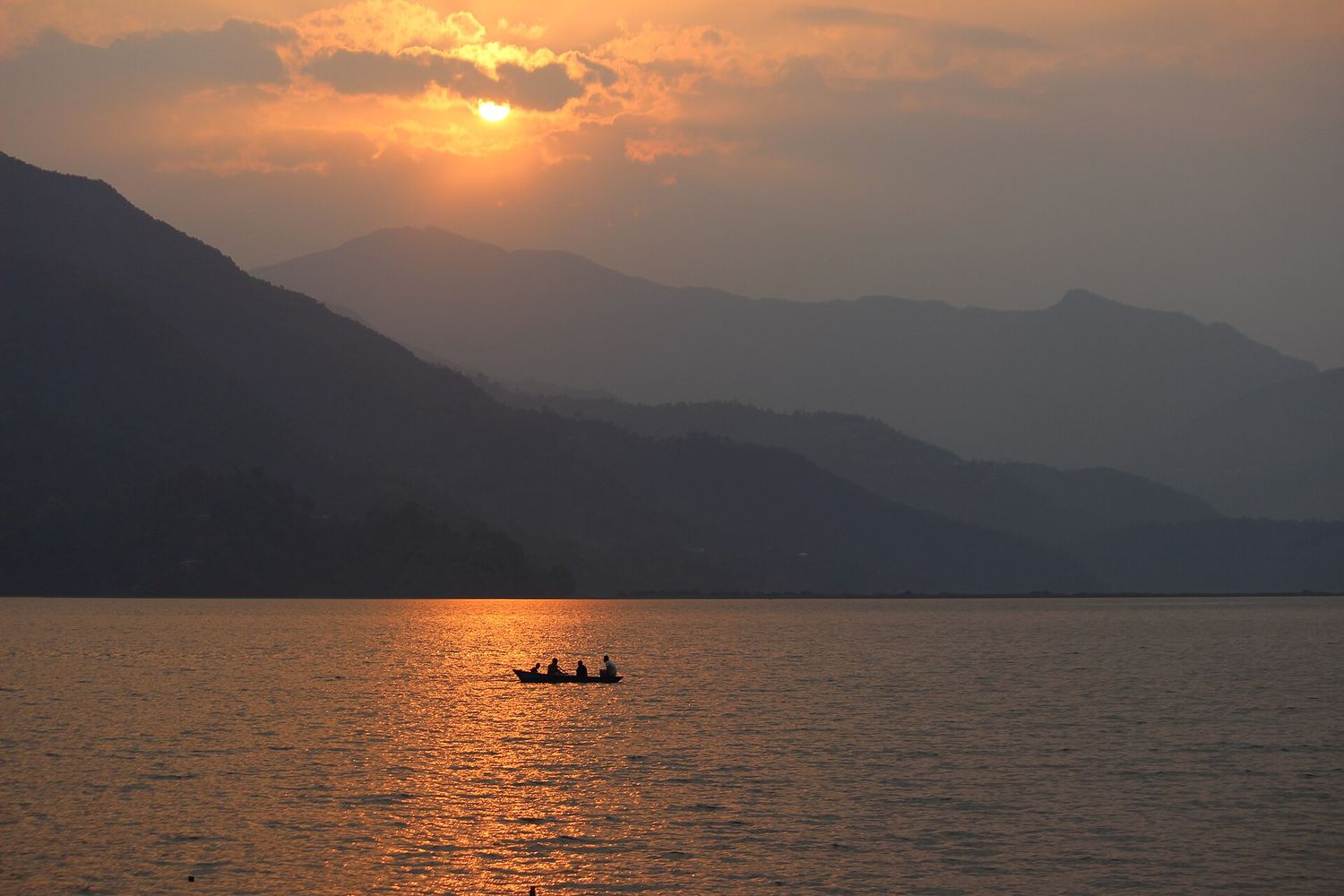
Pokhara sits at roughly 820 m beside Phewa Lake, with the Annapurna range and the Machhapuchhre (Fishtail) peak rising directly behind it. It is Nepal’s main base for adventure travel: lakeside cafés and guesthouses, paragliding and boating, and more trailheads for Himalayan walks than any other town in the country.
You can see it in a weekend or use it as the start of a week-long trek. Either way, the town is easy to reach and easy to move around.
Getting to Pokhara from Kathmandu
Most visitors arrive in Nepal through Kathmandu and continue to Pokhara by air or road.
- By air: flights take about 25 to 35 minutes and run many times a day on several domestic airlines. It is the quickest option and gives good mountain views on a clear morning.
- By road: the Prithvi Highway covers roughly 200 km and usually takes 6 to 8 hours, sometimes longer in holiday traffic or monsoon landslide season. Tourist buses and private cars both run the route.
- Book ahead in October and early November, when flights and buses fill quickly.
Getting to Pokhara overland from the south
Visitors travelling overland from the south can cross at Sunauli–Bhairahawa and continue to Pokhara by bus, shared jeep or private car. The drive is roughly 330 km and often takes around six hours or more depending on traffic. Other southern crossings connect to Kathmandu instead, so check the route before you commit, and confirm border, visa and vehicle rules with official sources.
Entry basics before you travel
Entry rules and visa requirements depend on your passport. Check the Department of Immigration and your own government’s travel advice before booking. Carry your passport for hotel check-in and for trekking permits, and keep passport-size photos for permit applications.
Prices on this site are quoted in US dollars with euro and rupee estimates, so you can compare costs without converting by hand. The Nepali rupee is used for everyday spending in Pokhara.
The best months to visit Pokhara
October and November give the clearest mountain views. March to May is warmer, with rhododendron in bloom on the hills. The monsoon, from June to September, brings heavy rain and cloudy views, though the lake and hills are green. Winter is cold on the heights but quiet and sunny in town. The best-time guide linked below gives a month-by-month breakdown.
What to do in and around Pokhara
Allow at least two full days before you start walking.
- Sunrise at Sarangkot, a viewpoint above the lake with Himalayan views on clear mornings.
- Boating on Phewa Lake and a walk to the lakeside temple.
- The World Peace Pagoda on the ridge above the lake.
- Short day hikes and village walks on the hills around town.
- Gear shopping and rentals in Lakeside if you are heading into the mountains.
Adding a trek to your Pokhara visit
Pokhara is the starting point for the Annapurna region’s best-known routes. With one to three days you can walk Sarangkot, Dhampus or Panchase. With four days, Ghorepani Poon Hill is the classic choice. Longer routes such as Mardi Himal and Annapurna Base Camp need more time and acclimatisation. Our routes page compares them by days, altitude and difficulty, and the permits guide explains what to arrange before you go.