
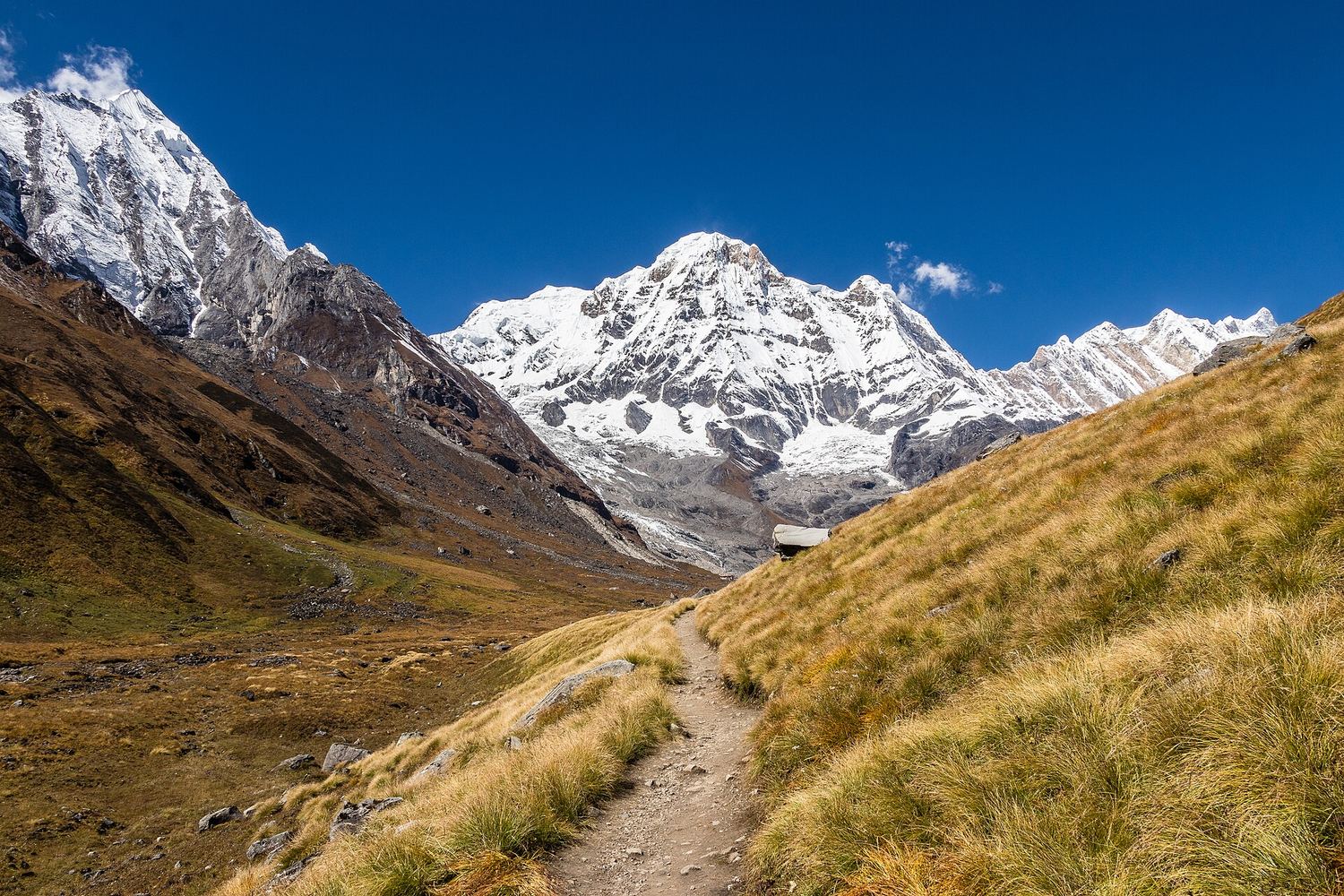
The future of Himalayan adventure: Trekking in 2028
As mountain travel evolves, trekking in Nepal in 2028 promises cleaner, smarter, and more sustainable trail networks. Solar-powered teahouses, expanded satellite emergency comms, improved trail maintenance, and plastic-free trail zones are transforming the Annapurna and Everest regions.
For travelers planning multi-year trips or aiming for 2028 departure dates, Nepal offers an unmatched combination of raw Himalayan majesty and warm mountain hospitality.
Building a multi-year Nepal trekking progression for 2028
Many mountain enthusiasts plan a multi-stage progression leading up to 2028. Here is how experienced trekkers structure their multi-year goals:
- Year 1 (Foundation): Complete a 4-day Ghorepani Poon Hill or 3-day Dhampus trek to test footwear, layering, and daily walking rhythm.
- Year 2 (Alpine Elevation): Progress to Mardi Himal (4,450 m) or Langtang Valley (3,870 m) to experience high-ridge trails and moderate elevation.
- Year 3 (High-Altitude Sanctuary): Execute a 9–12 day expedition to Annapurna Base Camp (4,130 m) or Everest Base Camp (5,364 m).
- Year 4 (2028 Himalayan Challenge): Tackle trans-Himalayan circuits such as the 15-day Annapurna Circuit over Thorong La Pass (5,416 m) or the Manaslu Circuit.
Smart financial & physical preparation for 2028
Preparing for 2028 allows you to spread trip expenses and conditioning over time:
- Physical Conditioning: Focus on long-term knee stability, core balance, and consistent aerobic endurance (hiking, cycling, running).
- Budget Management: Set aside $30–$50 per month into a dedicated Nepal adventure fund to easily cover permits, agency guide services, international flights, and trail expenses.
- Gear Investment: Invest gradually in high-quality waterproof shells and trail boots, relying on Pokhara rental shops for temporary items like heavy down sleeping bags.